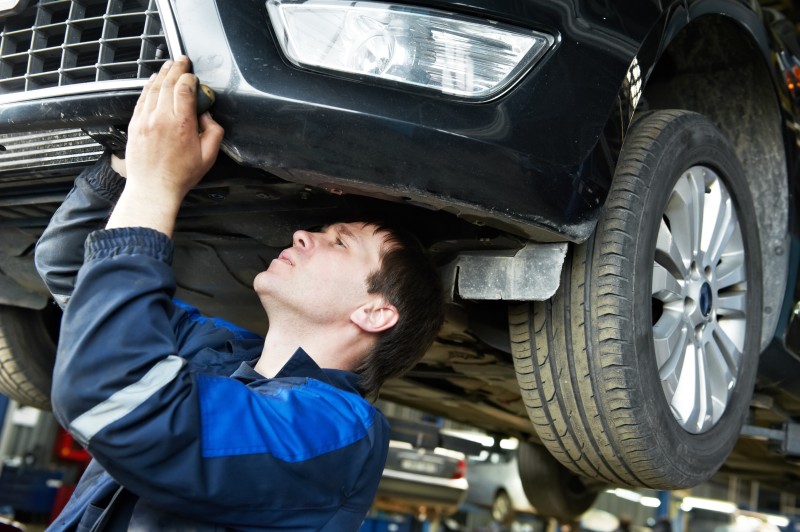
A car can feel different after a tire rotation because the tires have been moved to positions where they experience different steering, braking, and load forces. Small changes in road feel can be normal, but persistent vibration, pulling, noise, or handling changes may indicate uneven wear, pressure differences, balance issues, or another condition that deserves inspection.
A rotation does not change the tires themselves, but it changes where each tire operates on the vehicle. That matters because front and rear tires do not always wear at the same rate or in the same pattern.
For drivers in Terrace, BC, noticing a difference immediately after a rotation is not necessarily a sign that something went wrong. The important question is what kind of change is being felt and whether it continues.
Why Are Tires Rotated in the First Place?
Tire rotation helps manage differences in wear between tire positions.
Front tires often handle steering forces, and on many vehicles they also experience a substantial portion of the braking load. Depending on the drivetrain, certain tires may also handle more acceleration force than others.
Over time, those differences can cause one pair or one position to wear faster.
Transport Canada explains that front and rear tires usually wear differently and that regular rotation can help them last longer. It recommends following the vehicle manufacturer’s rotation instructions and notes that approximately 10,000 km is a common rotation interval, although the correct interval and pattern depend on the specific vehicle.
A professional tire rotation service can also provide an opportunity to look for uneven wear, damage, pressure concerns, or other conditions that may affect how the vehicle drives.
Is It Normal for the Steering to Feel Different After a Rotation?
A small change in steering feel can occur.
Before a rotation, each tire has spent thousands of kilometres operating in one position. Its tread may have developed a wear pattern related to that position, the road surface, alignment, inflation, and driving habits.
Moving that tire can temporarily change how the vehicle responds through the steering wheel.
For example, a front tire that has developed one wear pattern may feel slightly different after moving to the rear. Likewise, tires moved from the rear to the steering axle may transmit road texture differently than the previous front tires did.
Why Might Road Noise Change After Tire Rotation?
Tread wear is not always perfectly uniform across a tire.
Some tires may develop slight feathering, cupping, or other irregular wear patterns over time. Moving them to a new position can make the existing pattern more noticeable to the driver.
That can sometimes result in a change in road noise.
The tire rotation did not necessarily create the wear. Instead, the new position may make it easier to hear.
Can Tire Pressure Cause the Vehicle to Feel Different?
Yes.
Tire pressure affects steering response, ride comfort, tread contact, and handling.
If one tire is underinflated or significantly different from the others, the vehicle may feel less balanced after rotation. A tire that was previously on the rear axle may become more noticeable when moved to the front because steering feedback is transmitted directly through the steering wheel.
Tire pressure should be compared with the vehicle manufacturer’s recommendation, which is generally found on the tire-information placard or in the owner’s manual.
The number molded into the tire sidewall is not necessarily the vehicle’s recommended operating pressure.
Can a Rotation Reveal Uneven Tire Wear?
Yes, and this is one of the more useful things a rotation can reveal.
A tire may have been developing uneven wear for some time without producing an obvious symptom. Once it moves to another axle, the driver may suddenly notice:
- more road noise;
- a change in steering feel;
- a slight pull;
- additional vibration;
- or a rougher ride.
The rotation may not have caused any of those conditions. It may simply have made an existing wear pattern more noticeable.
Uneven tire wear can have several possible causes, including incorrect inflation, wheel alignment concerns, suspension conditions, or extended operation without rotation.
The wear pattern itself can provide useful clues, but it should be interpreted alongside the rest of the vehicle.
What Is the Difference Between Tire Rotation and Tire Balancing?
These two services address different issues.
A tire rotation moves the tires to different positions on the vehicle to help manage wear.
Tire balancing addresses uneven weight distribution in a wheel-and-tire assembly.
Even a small imbalance can become more noticeable as speed increases because the wheel rotates rapidly. A driver may feel vibration through the steering wheel, floor, or seat.
Transport Canada advises that wheels should be balanced and notes that imbalance may cause pounding or shaking through the steering wheel or seat. It also says imbalance can contribute to uneven tire wear and increased fuel consumption.
Why Might Vibration Become Noticeable Only After a Rotation?
The location of an imbalanced wheel can change where the driver feels the symptom.
A slightly imbalanced tire on the rear axle may produce only a mild sensation through the seat. Move that same wheel to the front axle and the vibration may become much easier to feel through the steering wheel.
That can make it seem as though the rotation created the vibration.
In reality, the rotation may have revealed an existing balance condition.
The same principle can apply to tire wear. A tire with irregular tread wear may be less noticeable in one position than another.
Can Wheel Alignment Affect How the Car Feels After Rotation?
Yes.
Wheel alignment and tire rotation are separate services, but the condition of one can influence what drivers notice after the other.
If wheel alignment is outside the vehicle’s proper specifications, tires may develop uneven or rapid wear. Moving those tires can make the effect of that wear more noticeable.
Transport Canada recommends having wheel alignment checked if tires show rapid or uneven wear on their inner or outer edges.
A vehicle that consistently pulls to one side after rotation may therefore need more than another rotation.
Possible factors can include:
- pressure differences;
- tire condition;
- alignment;
- road crown;
- suspension conditions;
- or other mechanical issues.
The symptom should be evaluated rather than assuming one cause.
Should Tires Always Be Rotated in the Same Pattern?
No.
The correct rotation pattern depends on several factors, including:
- whether the vehicle is front-wheel drive, rear-wheel drive, or all-wheel drive;
- whether the tires are directional;
- whether front and rear tires are different sizes;
- and what the vehicle or tire manufacturer specifies.
Some vehicles may have restrictions that prevent a conventional front-to-rear or cross-rotation pattern.
This is one reason drivers should follow the manufacturer’s recommendations rather than applying one universal rotation pattern to every vehicle.
How Does a Tire Change Differ From Rotation?
A tire change involves removing one set of tires or wheel-and-tire assemblies and installing another.
That may happen during seasonal changeovers, after tire damage, or when replacement tires are needed.
A tire rotation, by contrast, generally keeps the same tires on the vehicle while moving them to different positions.
The two services may occur at the same appointment, particularly during seasonal maintenance, but they accomplish different things.
How Long Should It Take for Tires to Feel Normal After Rotation?
There is no universal “settling period.”
A mild difference in sound or steering feedback may become less noticeable as the tires continue to wear in their new positions. However, drivers should not expect a strong vibration, pull, thumping sensation, or significant handling problem to disappear simply because more kilometres are added.
If something feels clearly wrong after the service, it is reasonable to have the tires inspected.
That is especially important if the vehicle:
- vibrates at certain speeds;
- begins pulling noticeably;
- produces a new repetitive noise;
- feels unstable;
- or shows a tire-pressure warning.
Persistent changes deserve investigation.
Can Tire Rotation Help Tires Last Longer?
Regular rotation can help distribute wear more evenly, which may support longer usable tire life.
Transport Canada specifically recommends regular tire rotation and notes that front and rear tires tend to wear differently.
However, rotation cannot correct every cause of abnormal tire wear.
If the underlying issue is incorrect inflation, poor alignment, suspension wear, tire damage, or another mechanical condition, simply rotating the tires may move the symptom rather than solve it.
What Should Drivers Check After a Tire Rotation?
After a rotation, drivers can pay attention to several practical things.
Steering feel
The vehicle should remain predictable and controllable without a strong tendency to pull.
Vibration
A new speed-related vibration may indicate a balance concern or another tire or wheel condition.
Noise
A modest difference in tread noise may occur, but loud or repetitive noises should be investigated.
Tire pressure
Make sure inflation remains appropriate for the vehicle manufacturer’s specifications.
Warning lights
If the tire-pressure monitoring system activates after service, the pressure should be checked rather than assumed to be a temporary issue.
Noticing these details early can make it easier to identify a problem before additional tire wear occurs.
When Should Tires Be Inspected After a Rotation?
An inspection is a sensible next step whenever the vehicle feels substantially different and the change does not quickly resolve.
Drivers should consider professional evaluation if they notice:
- persistent steering-wheel vibration;
- strong pulling;
- significant new road noise;
- thumping or shaking;
- uneven-looking tread;
- repeated pressure loss;
- or obvious tire damage.
The goal is to determine whether the change comes from normal differences in tire position or from an underlying condition that needs attention.
A Tire Rotation Can Reveal More Than It Changes
A tire rotation can make a car feel slightly different because tires that have developed unique wear patterns are moving into new positions.
That does not automatically mean anything is wrong. At the same time, a noticeable vibration, pull, noise, or handling change should not be ignored.
Rotation can expose existing pressure differences, imbalance, irregular wear, or alignment concerns that were less obvious before.
For drivers, the practical approach is to pay attention to how the vehicle feels after service, follow the manufacturer’s maintenance recommendations, and have persistent symptoms inspected rather than waiting for them to worsen.
About Rain Coast Service Centre
Rain coast service centre operates at 5127 Keith Ave in Terrace, BC, providing tire services and automotive maintenance for local drivers. Their website describes their mechanics as experienced and qualified, with verified tire services including rotations, mounting, balancing, seasonal changeovers, inspections, and tire repair; customers can reach them at (250) 638-0072 or locate their shop on Google Maps.