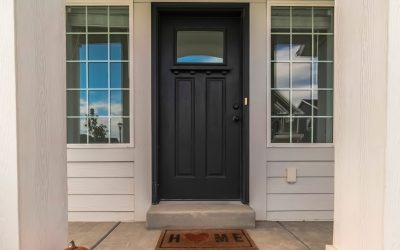
Front door hardware should be scaled in proportion to the height, width, visual weight, and overall design of the door. On a large entry door, undersized hardware can look lost, while oversized hardware can dominate the design and make the entrance feel unbalanced.
For homeowners in Phoenix, AZ, this consideration is especially important when working with tall, wide, or architecturally detailed custom front doors. The hardware should feel intentional and easy to use while supporting the overall character of the entry.
Why Does Hardware Scale Matter on Large Front Doors?
Hardware is one of the most noticeable finishing elements on a front door. Handles, pulls, locksets, hinges, and decorative plates all contribute to the visual balance of the entrance.
On a standard-size door, common residential hardware proportions often work well. On a taller or wider door, however, the same handle may appear too small relative to the door surface.
How Long Should a Pull Handle Be on a Tall Front Door?
There is no single correct handle length for every large front door.
A taller door can often support a longer pull because the added vertical surface gives the hardware more room visually. Long linear pulls are commonly paired with contemporary custom front doors because they reinforce the door’s height and clean geometry.
On traditional or transitional doors, the hardware may be shorter and more decorative while still being scaled larger than a standard residential handle.
Should Wider Doors Use Larger Hardware?
Often, yes.
A wide door creates more visual mass, which can make small hardware appear insignificant. A larger pull, broader backplate, or more substantial handle set can help create better balance.
This becomes particularly important with oversized single doors that are intended to act as a focal point.
For homeowners considering luxury front entry doors, the hardware should be evaluated as part of the complete composition rather than added as an afterthought. Door width, height, wood species, glass, finish, and surrounding architecture all influence what hardware scale feels appropriate.
How Does Door Style Affect Hardware Size?
Door style has a major influence on hardware selection.
Modern custom front doors often use simple, elongated pulls with clean lines. The hardware can become part of the door’s geometry rather than serving only as a functional element.
Traditional doors may call for lever handles, decorative escutcheons, or more detailed hardware. In these cases, visual weight can come from the shape and ornamentation rather than length alone.
Does Panel Layout Affect Where Hardware Should Go?
Yes. Hardware placement should respect the panel configuration and other design details.
If a door includes raised panels, horizontal rails, glass inserts, or decorative carving, the handle should be positioned where it does not interrupt those elements unnecessarily.
The relationship between the handle and the door edge also matters. Hardware placed too close to a panel border may feel cramped, while hardware placed too far inward may look disconnected from the door’s operating edge.
How Should Hardware Be Scaled on Double Front Doors?
Double doors require additional visual balance because the hardware appears across two panels instead of one.
If both doors have matching large pulls, the pair should create a symmetrical appearance. If one door serves as the primary active panel and the second is used less frequently, the hardware can still be coordinated so both sides look intentional.
Spacing between the pulls is another consideration. Handles that sit too close together can make the center of the entry look crowded, while handles placed too far apart may appear disconnected.
Should the Hardware Finish Match Other Exterior Features?
It does not have to match exactly, but coordination usually creates a more cohesive exterior.
Hardware finishes can relate to nearby elements such as:
- Window frames
- Exterior lighting
- House numbers
- Gates
- Railings
- Roof details
- Garage door hardware
For example, black or dark bronze hardware can work well with modern window frames or darker stone accents. Warmer bronze or aged finishes may coordinate more naturally with wood tones, stucco, or traditional architecture.
The most successful combinations usually repeat or relate to at least one other exterior detail.
How Does Door Weight Affect Hardware Selection?
Visual scale and structural requirements are related but not identical.
A large wood door may require hinges, pivots, and operating hardware designed to support its actual weight. These components should be selected according to the door’s dimensions, construction, and manufacturer requirements.
Can Hardware Be Too Large for a Front Door?
Yes.
Hardware can become visually dominant when it occupies too much of the door surface or conflicts with glass, panels, or decorative features.
A very long pull may work well on a tall contemporary slab door but look excessive on a traditional paneled entrance. Likewise, an oversized decorative backplate can make a narrower door feel crowded.
The best approach is proportional rather than maximal. Large doors generally support larger hardware, but the final size should still leave enough visual space around the hardware.
How Can Homeowners Plan Better Hardware Proportions?
Start by looking at the full door rather than selecting hardware in isolation.
Consider the door’s height, width, material, panel layout, glass, finish, and surrounding architecture. Then evaluate how the handle, lockset, hinges, and other visible components fit within that composition.
For Phoenix homeowners contact us today planning large custom front doors, thoughtful hardware scaling can make the entrance feel more balanced and intentional while supporting comfortable everyday use.