Reaching into a deep car trunk can strain the lower back because it combines forward bending, extended reaching, and lifting while the load is positioned far from the body. This posture increases the effort required from the lower-back and hip muscles, especially when the object is heavy, difficult to grasp, or lifted while the body is twisting.
The movement can be deceptively demanding. A grocery bag or suitcase may feel manageable when carried close to the body, yet retrieving the same object from the back of a trunk can create a very different physical challenge. Understanding the mechanics can help drivers make better lifting decisions and recognize when recurring pain deserves evaluation.
Why Does Trunk Depth Change the Demands of Lifting?
The farther an object is from the body, the more muscular effort is required to control it. When an item sits near the back of a deep trunk, a person may have to lean across the bumper while extending both arms.
This position moves the object and much of the upper body away from the hips. The lower-back muscles must work harder to keep the trunk controlled as the person reaches, grasps the item, and begins pulling it forward.
A deep trunk can also limit access. Unlike lifting from an open floor, the person cannot always step close to the object or place their feet on both sides of it. The bumper, trunk wall, and vehicle height may force the body into a less efficient position.
The physical demand may rise further when someone:
- Reaches with the arms fully extended
- Holds their breath while pulling
- Lifts before moving the item closer
- Keeps the knees straight
- Rounds primarily through the lower back
- Rotates while still bent forward
- Uses one hand for an uneven load
- Moves quickly because the object feels light
No single movement guarantees an injury. Difficulty is more likely when several factors occur together or when the back is already sensitive.
What Happens to the Spine While Reaching Forward?
Reaching into a trunk usually requires flexion through the hips and spine. The muscles along the back lengthen while remaining active to control the upper body.
If the hips contribute adequately, the movement can be distributed across several regions. When hip mobility is limited or the person reaches farther than expected, more movement may occur through the lumbar spine.
The lower back then has to control the weight of the upper body as well as the object being retrieved. This demand can increase when the load is suddenly lifted from the trunk floor or pulled free from surrounding items.
Why Can Twisting Make the Movement More Difficult?
Many people stand slightly to one side of the trunk rather than directly behind the object. They may then reach diagonally, grasp the item, and turn toward the side where they intend to carry it.
This creates a combination of bending and rotation. The movement can be more demanding when the feet remain planted while the torso turns.
Twisting becomes particularly relevant when handling objects with shifting contents, such as:
- Grocery bags
- Tool bags
- Coolers
- Storage bins
- Strollers
- Sports equipment
- Pet carriers
- Luggage with loose contents
The body may need to respond quickly if the weight shifts. Turning the feet and moving the entire body toward the intended direction can reduce the need to rotate primarily through the lower back.
Why Can a Light Object Still Cause Back Pain?
An object does not have to be exceptionally heavy to challenge the back. Distance, repetition, speed, grip quality, and body position can matter as much as the number on a scale.
A light container positioned at the far edge of a trunk may require an extended reach. If its handle is awkward, the person may grip with one hand and tilt the torso to one side. The resulting movement can place an uneven demand on the back.
Repetition also matters. Loading and unloading numerous bags, packages, or work supplies creates accumulated demand. A person may tolerate the first few lifts comfortably but notice stiffness or pain later in the day.
What Symptoms May Follow an Awkward Trunk Lift?
Symptoms can begin during the lift, immediately afterward, or several hours later. They may remain localized or spread into nearby areas.
Possible symptoms include:
- A sharp sensation during the initial pull
- A dull ache across the lower back
- Tightness when returning upright
- Discomfort when sitting afterward
- Pain during bending or rotation
- Stiffness after getting out of the vehicle
- Aching near one side of the lower back
- Symptoms extending into the buttock or leg
These symptoms do not identify a specific diagnosis on their own. Pain that extends into the leg may involve nerve irritation, but it may also have another source. Persistent or worsening symptoms should be evaluated rather than diagnosed from the lifting event alone.
How Can Objects Be Retrieved From a Trunk More Comfortably?
No lifting method eliminates all physical demand, but several practical changes may reduce unnecessary strain.
Move closer before lifting
If possible, slide the object toward the trunk opening before raising it. Moving the load closer shortens the distance between the object and the body.
A person may need to reposition an item in stages rather than attempting one continuous lift. This can be especially useful for luggage, storage containers, or work equipment.
Keep the load near the body
Once the item reaches the trunk opening, bring it closer before standing upright. Holding a load at arm’s length increases the effort needed to control it.
Use both hands when practical
Two-handed lifting can distribute the load more evenly. It may also reduce the tendency to lean or rotate toward one side.
Bend through the hips and knees
Allowing the hips and knees to participate can reduce reliance on the lower back. The exact position will depend on trunk height, vehicle design, and individual mobility.
Move the feet before turning
After lifting, step toward the intended direction rather than twisting through the torso while the feet remain fixed.
Divide the load
Several smaller items may be easier to manage than one large container. This is particularly useful when the original object has no secure handles.
Ask for assistance when needed
A bulky or shifting item may require another person, even if its total weight seems manageable. Size and grip difficulty can make a load demanding before weight becomes the main concern.
Does Vehicle Design Affect Lower-Back Strain?
Vehicle dimensions influence how someone reaches and lifts. A high cargo floor may require the person to elevate the shoulders and pull upward. A low trunk can require deeper bending. A wide bumper can prevent the hips from moving close to the load.
Cargo arrangement can either reduce or increase the challenge. Frequently used items placed near the opening are generally easier to reach than equipment stored at the far edge.
Useful considerations include:
- Keeping heavier items closer to the trunk opening
- Preventing loose objects from rolling toward the back
- Using containers with secure handles
- Avoiding stacks that require reaching over other items
- Placing small items in an accessible organizer
- Clearing enough space to use both hands
People who repeatedly load tools, supplies, or equipment for work may benefit from reviewing the cargo layout rather than treating every lift as an isolated event.
When Might Trunk-Related Back Pain Involve a Spinal Disc?
Disc-related symptoms are one possibility, but they cannot be confirmed solely because pain followed a forward-reaching lift. A clinical evaluation is needed to consider the symptom pattern and rule out other sources.
Features that may warrant closer assessment include:
- Pain that extends into the buttock or leg
- Tingling or numbness
- Symptoms that increase during sitting or forward bending
- Leg or foot weakness
- Pain that changes with coughing or sneezing
- Recurrent episodes after similar movements
Even these findings do not prove that a particular disc is responsible. Examination findings, symptom behavior, health history, and imaging when clinically appropriate must be considered together.
When Is Lower-Back Pain an Emergency?
New or worsening bladder or bowel dysfunction, difficulty urinating, numbness around the groin, genitals, buttocks, or inner thighs, changes in sexual function, or severe or worsening weakness in both legs may indicate cauda equina syndrome.
Go to the nearest emergency room immediately. Do not wait for a chiropractic appointment. If you cannot travel safely, call emergency services.
Source: Somerset NHS Foundation Trust: Cauda Equina Syndrome
What Other Symptoms Require Urgent Medical Care?
Severe back pain following significant trauma or accompanied by fever requires urgent medical evaluation. Chest pressure, breathing difficulty, or unexplained sweating also requires immediate emergency care.
How Can a Chiropractor Evaluate the Problem?
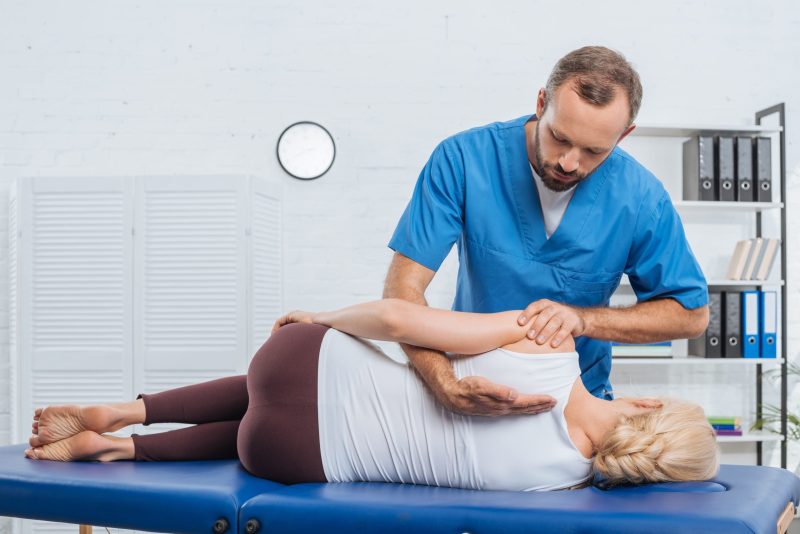
A Chiropractor may ask how the lift occurred, where the object was positioned, whether the body twisted, and when the symptoms began. Details about the vehicle, cargo, and lifting sequence can help clarify the physical demands involved.
An evaluation may include spinal and hip movement, strength, sensation, reflexes, posture, and symptom response to different positions. The provider may also consider whether walking, sitting, bending, or transitioning between positions changes the discomfort.
The objective is not simply to label the pain according to where it is felt. A useful assessment considers whether the symptoms appear to involve muscular strain, joint restriction, nerve irritation, disc sensitivity, or another issue requiring referral.
Chiropractic care may include adjustments, corrective exercises, or movement guidance when supported by the findings. The appropriate approach varies according to the condition, symptom severity, health history, and patient tolerance.
When May Spinal Decompression Be Considered?
Spinal decompression is a form of controlled traction that may be considered for selected disc-related or nerve-related symptoms. It uses a specialized table to apply gradual pulling and relaxation cycles to a targeted spinal region.
People researching conservative options near Macomb Township may encounter Decompression Therapy for Back Pain when symptoms appear related to lumbar disc pressure or nerve irritation. Whether treatment is suitable still depends on an examination rather than the activity that triggered the pain.
Treatment should not be presented as a universal response to discomfort after lifting. A muscular strain, fracture, hip disorder, inflammatory condition, or serious neurological problem may require a different approach.
What Does Back Decompression Address?
Back decompression is intended to change mechanical loading temporarily within a targeted area of the spine. For lower-back symptoms, the patient is positioned on a decompression table while controlled traction is applied to the lumbar region.
The force, position, and treatment schedule should reflect the patient’s condition and response. More traction is not automatically better, and treatment should not involve forcing the spine into a painful position.
Who May Not Be a Candidate for Decompression?
Not everyone with lower-back pain is suited for decompression. Patient selection is important because certain medical or structural conditions may make traction inappropriate.
Factors requiring careful review may include:
- Recent fractures
- Advanced osteoporosis
- Spinal instability
- Active infection
- Certain spinal implants
- Some postoperative conditions
- Pregnancy
- Serious neurological findings
- Other relevant medical concerns
A provider should review health history, examination findings, and available imaging before recommending care. If symptoms suggest a condition outside the scope of conservative treatment, further medical evaluation may be necessary.
How Can Future Trunk Lifts Be Planned?
Preventing every episode of back pain is not always possible, but planning can reduce avoidable physical demand. The most useful changes are often specific to the vehicle and the items being carried.
Before lifting, consider:
- Can the object be slid closer?
- Is there a secure handle?
- Can the contents be divided?
- Is there space for both hands?
- Can the feet turn with the body?
- Would another person make the lift safer?
- Is the item used often enough to store near the opening?
Someone whose work requires daily loading may benefit from changing how the trunk is organized. A small layout adjustment can reduce repeated long reaches across hundreds of lifts.
Seek an Evaluation for Persistent Lower-Back Symptoms
Pain after reaching into a trunk may reflect temporary muscular strain, altered joint movement, disc sensitivity, nerve irritation, or a combination of factors. When symptoms persist, recur, travel into the leg, or interfere with routine activity, an evaluation can help clarify the next step.
A qualified provider can assess the symptom pattern and determine whether chiropractic care, movement guidance, exercises, spinal decompression, or another form of care may be appropriate.
About Elwart Family Chiropractic
Elwart Family Chiropractic is located at 42958 Garfield Road in Clinton Township, Michigan, and serves patients from surrounding Macomb County communities. The practice is led by Dr. Derek Elwart, D.C., a Life University graduate who is nationally board-certified and licensed in Michigan, with a focus that includes chiropractic care and spinal decompression; call (586) 741-5782 or find their office on Google Maps for location details.